Style tips: this block makes you overdo it
Hello, Iris here.
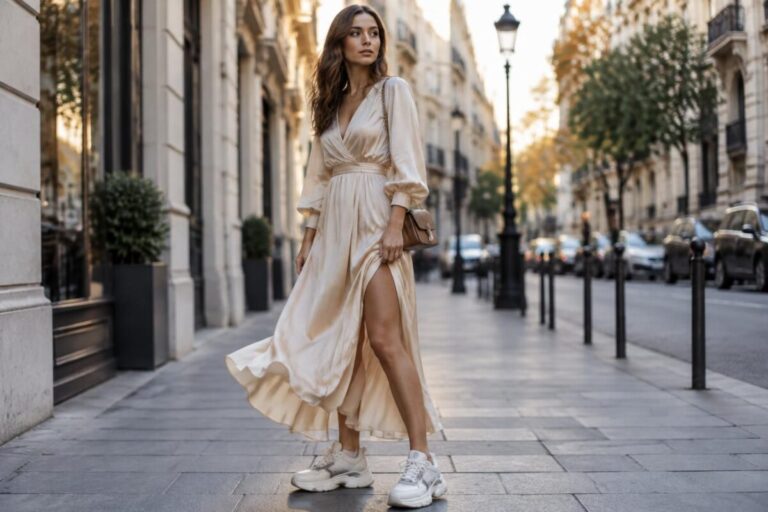
To avoid an overly busy outfit, keep one statement piece and simplify the rest. The sticking point often comes from worrying that a pared-back look will seem too ordinary. But balanced outfits rely more on cohesive choices than on piling things on.
Try this now
- Choose one standout piece: a colorful jacket, a print, or a striking piece of jewelry.
- Take one item off before you leave, especially if several accessories are drawing attention.
- Limit your palette to two or three main colors.
- Check the proportions: pair a loose-fitting piece with something more fitted.
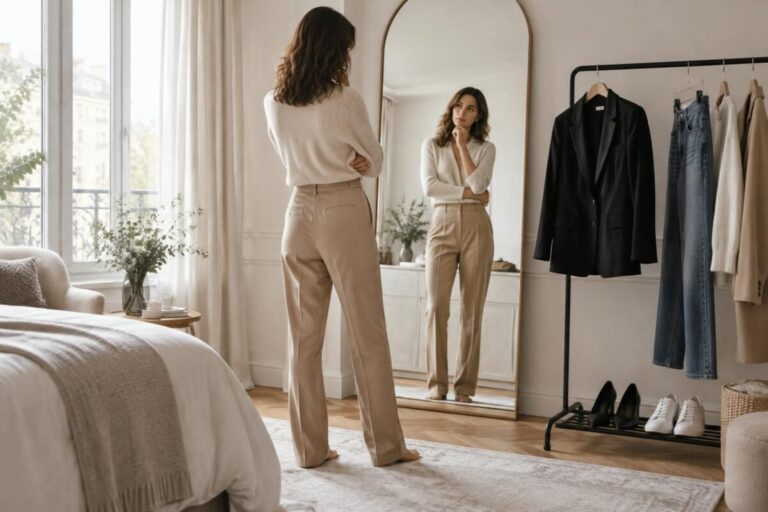
- Look at your silhouette from a distance to spot anything that takes up too much visual space.
If you often find yourself stuck when getting dressed, these mistakes that hold your style back can help you understand why. And to pare back your accessories, find out when a subtle piece of jewelry can better balance an outfit.
Style overload often starts with good intentions
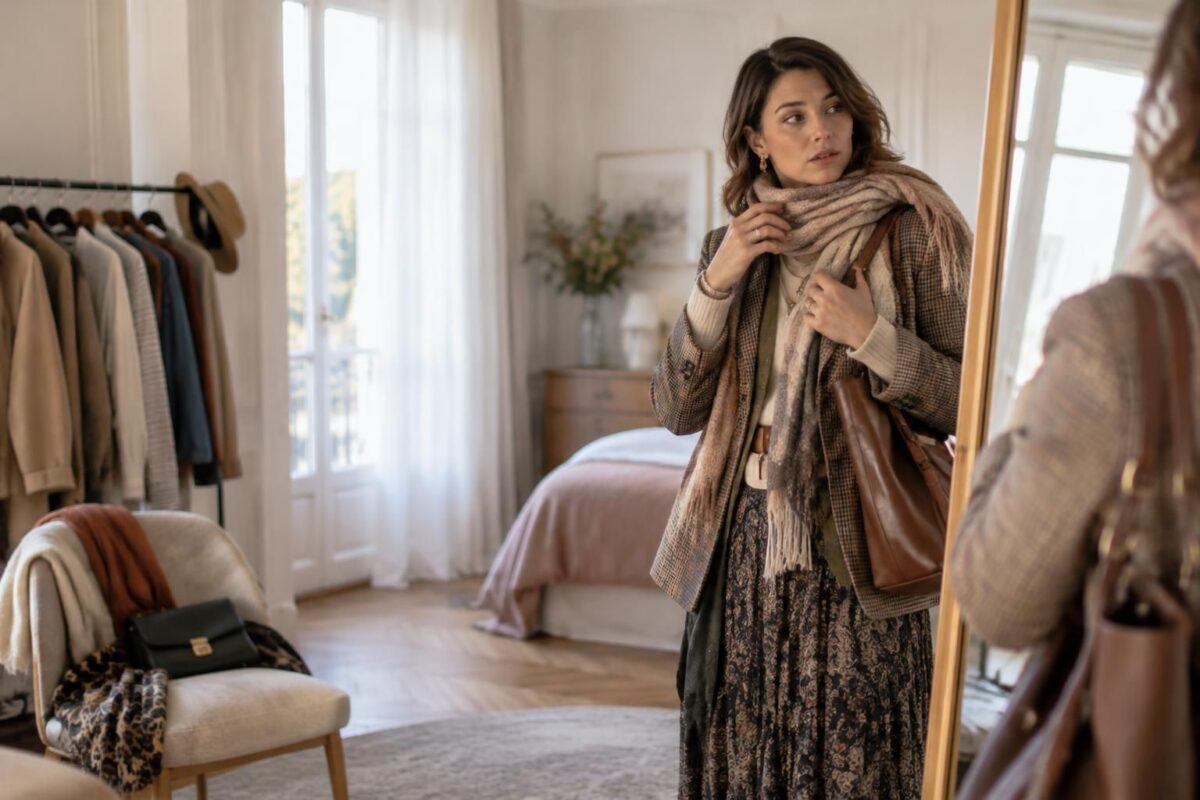
You add a belt, a necklace, a colorful bag, then a patterned jacket to give your look some character. Each piece seems interesting on its own, but together they create style overload and blur the focal point.
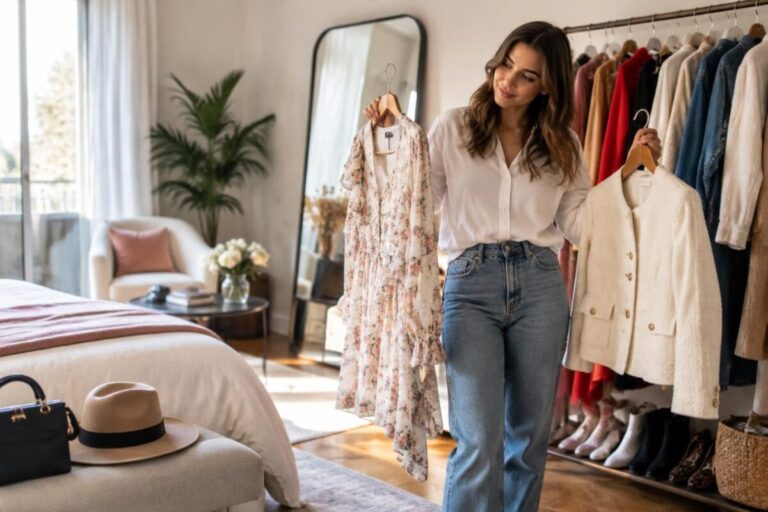
Picture Lina wearing a printed skirt, a ruffled top, and large earrings. By swapping her top for a plain one, she keeps her personality while creating a more defined silhouette. Simplicity in how you dress doesn’t take away your style: it gives it room to shine.
Spot what makes an outfit feel too busy
An outfit can feel busy because of its patterns, details, colors, or proportions, even if it contains just a few pieces. The easiest approach is to spot what catches your eye first, then decide whether the other elements support it or compete with it.
Lina’s outfit works better with a simple color scheme: she keeps the skirt’s print and chooses accessories in a color that’s already in the pattern. A repeated color is often all it takes to tie the pieces together.
| What makes an outfit feel too busy | What to do |
|---|---|
| Several contrasting prints | Keep one main print and choose solid pieces to go with it |
| Accessories that all stand out | Keep one statement accessory and tone down the rest |
| Loose-fitting pieces everywhere | Add a more fitted piece to give the silhouette structure |
| Too many dominant colors | Limit the palette to two or three main shades |
Three steps to tone down an overly busy outfit
- Identify the focal point. Ask yourself: which piece do you really want to highlight? Choose it before adding anything else.
- Remove anything that competes with that piece. Take off an accessory, a patterned item, or a layer, then see if the whole outfit feels more balanced.
- Rebalance the colors and proportions. Use a color that’s already in the outfit and check that your silhouette looks balanced from head to toe.
This approach also turns a pared-back wardrobe into an asset: a few well-chosen clothes offer more cohesive combinations than a pile of pieces that are hard to wear together. Confidence in your style grows when every choice has a reason.
Frequently asked questions about overly busy outfits
How many colors should you wear in an outfit?
Two or three main colors are a simple guideline. You can add a small contrasting accent as long as it doesn’t compete with the statement piece.
How can you wear several accessories without overloading your look?
Choose one accessory that draws attention, then opt for more subtle pieces around it. You can also repeat a color to create a visual link.
Could a minimalist outfit look boring?
No. A great cut, an interesting fabric, or a distinctive detail is enough to add character without piling on more elements.
What if I like every item in my outfit?
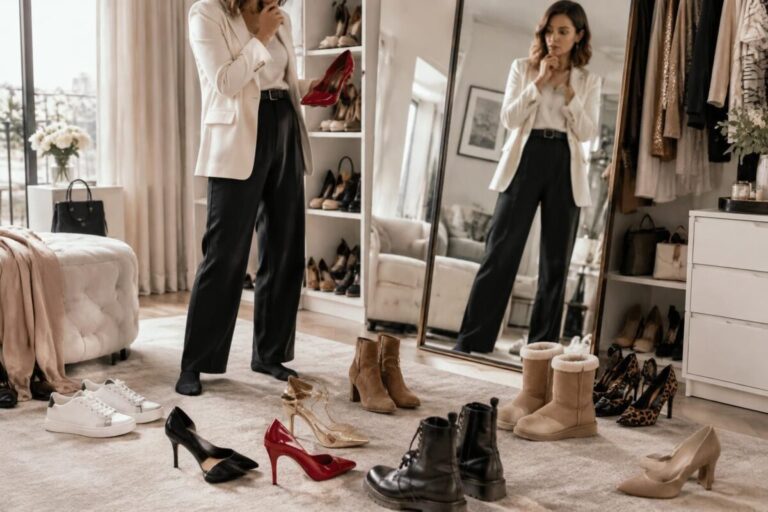
Take a photo of your look or step away from the mirror for a few seconds. If your eyes don’t know where to settle, temporarily remove one piece and compare the two versions.
I hope you found these tips helpful. See you soon! — Iris