Looks mode: how to find your style when you like everything
Hi, I’m Iris. To find your style when you like everything, look for what keeps showing up in the things you’re drawn to, then build around three words and a few easy-to-match pieces. You don’t need to choose just one aesthetic or follow every trend. The goal is to put together looks that feel like you and work in your real life.
Try this right away
- Write down three words that describe the look you want to express: casual, elegant, creative, for example.
- Pick out five pieces you wear often and ask yourself what you like about each one.
- Save fashion inspiration images without trying to recreate the outfits exactly.
- Think about the situations you face during the week: work, going out, getting around, or days at home.
- Put together an outfit featuring a piece you love but rarely wear.
To make progress without losing focus, you can follow these methods for identifying your style, then discover how to avoid purchases that don’t work with your outfits with this guide to finding your style without unnecessary shopping.
Notice what you really like about your looks
Liking several styles isn’t a problem. A minimalist outfit on Monday and a mix of styles on Saturday can easily coexist if certain details feel like you: a color, a cut, a piece of jewelry, or a way of wearing a jacket.
Create a mood board with the silhouettes, colors, and accessories that catch your eye. After a few days, look for the elements that keep appearing. If you often save images of loose trousers, structured jackets, and neutral tones, you already have some useful clues for defining your personal style.
The three-step process
- Step 1: collect around fifteen images of outfits you like, without sorting them at first.
- Step 2: group them by element: cuts, colors, fabrics, or accessories.
- Step 3: note three recurring features and turn them into guidelines for putting together your next outfits.
Take inspiration from trendy looks, but don’t copy them outright: an outfit you see online should be adapted to your comfort, your figure, and your everyday life. Inspiration is a starting point, not a rule to follow.
Let your wardrobe guide you, not limit you
Your wardrobe already contains valuable information. Set aside the clothes you enjoy wearing and notice what they have in common. On the other hand, if a piece has been hanging on its hanger for months, ask yourself whether it’s hard to style, uncomfortable, or simply no longer in line with what you want.
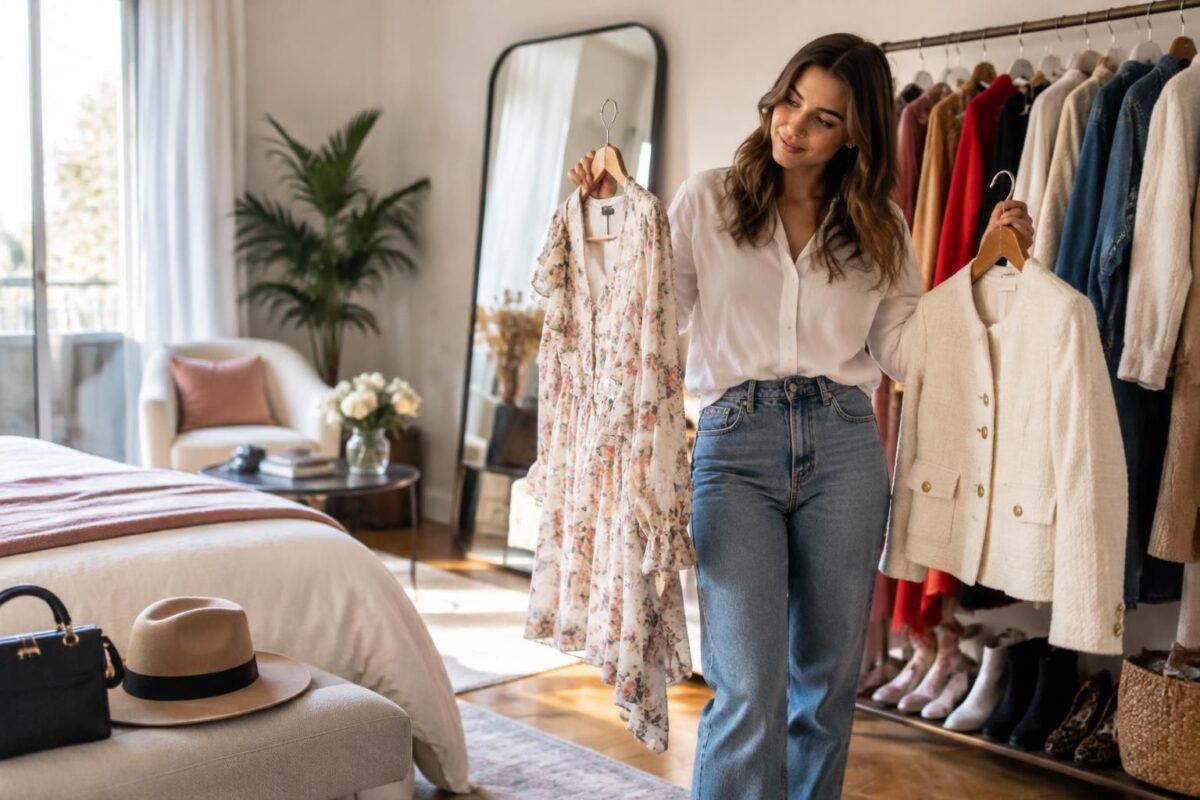
There’s no need to throw everything out or overhaul your wardrobe all at once. Start by putting your favorite pieces together in different ways. A well-fitting pair of jeans, a shirt, a soft blazer, or a comfortable pair of shoes can become wardrobe staples if they work with the rest of your clothes.
| What you notice | A simple experiment | What it might reveal |
|---|---|---|
| You often wear loose-fitting clothes | Add a more structured jacket | You may enjoy the contrast between different volumes |
| You keep coming back to the same colors | Pair a familiar shade with a new color | Your palette can expand without losing its cohesion |
| You like understated outfits | Try a statement accessory | A small detail could become your signature |
| You alternate between several aesthetics | Keep one common piece in each outfit | Mixing styles can reflect your different moods and preferences |
If comfort comes first for you, choose an easy-to-wear base and play with an accessory. If you’re driven by a desire for change, keep some neutral pieces to balance bolder combinations.
Try different cuts and colors without putting yourself in a box
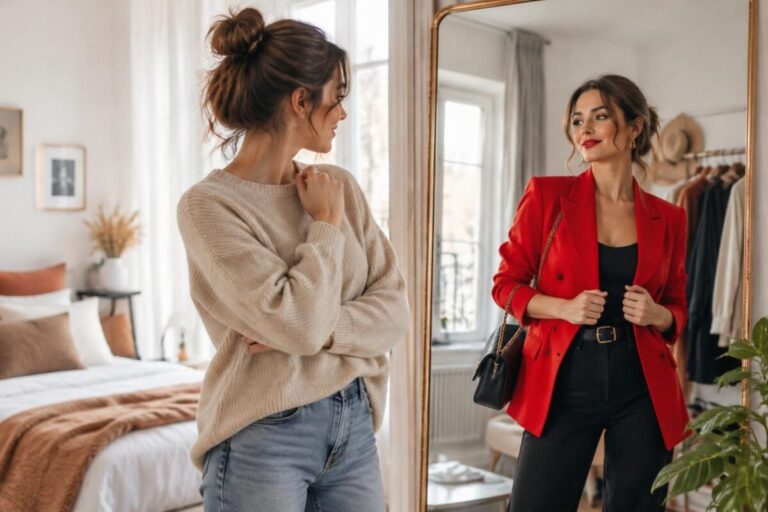
Knowing your body shape can help you choose clothes you feel good in, but no body shape comes with a required list of clothes to wear. Try different lengths and see how they look in the mirror, while moving and while sitting: comfort matters just as much as appearance.
You can do the same with colors. Wear one shade close to your face, then compare it with another in daylight. Keep the ones that make you want to get dressed, without ruling out a color you love just because some rule says it isn’t right for you.
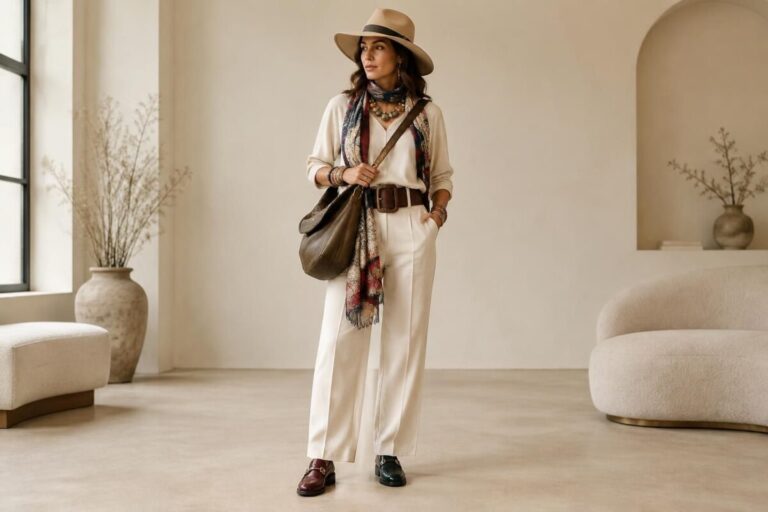
To experiment with clothes without pressure, take a photo of two or three combinations. It’s often more helpful than judging an outfit in a hurry in front of your wardrobe. A belt, a scarf, or earrings can also transform a simple outfit into a form of self-expression.
Build outfits that work for your everyday life
A style you enjoy should work beyond inspiration photos. If you walk a lot, plan for suitable shoes. If you work in a formal setting, look for polished clothes you can wear all day without counting the minutes until you can take them off.
Choose a few basics that are easy to mix and match, then add the details you enjoy. You don’t need a huge wardrobe: a handful of versatile pieces is often enough to create several outfits, depending on the clothes you already own and your habits.
In the morning, lay out a complete outfit the night before, including shoes and accessories. A classic oversight is trying on a new pair of trousers without the shoes you plan to wear with them: the length can look different. Trying everything on together helps avoid surprises.
Try things out gradually and keep what feels like you
Your personal style takes shape through use. For a week, choose one small new thing to try: a color combination, a different cut, or a more noticeable accessory. If you feel good and the outfit meets your needs, keep the idea. If not, you’ll have learned something without turning your whole wardrobe upside down.
You can also make a note of the outfits that make you feel comfortable, confident, and free to move. That’s a more useful guide than a passing trend. And if your tastes change with your mood, that doesn’t mean you’re inconsistent: some pieces can simply reflect different sides of your personality.
A few answers to help you find your style
How can you find your style when you like several aesthetics?
Look for details your preferences have in common: a cut, a color palette, or an accessory. You can mix several influences while using these elements as a common thread.
Do you have to follow trends to have style?
No. Choose only the trendy looks you like and that work for your everyday life. A cohesive, comfortable outfit often reflects your personality better than a garment worn only because it’s fashionable.
How can you avoid unnecessary purchases?
Before buying, check that the piece goes with at least a few clothes you already wear. Also ask yourself whether it meets a real need or whether you only like it in a photo.
How long does it take to define your personal style?
There’s no set timeframe. A few weeks of observation and experimentation can help you identify some guidelines, but your style can evolve with your preferences and activities.
Thank you for your interest; Iris. Thanks also for leaving a comment at the end of the article .See you soon