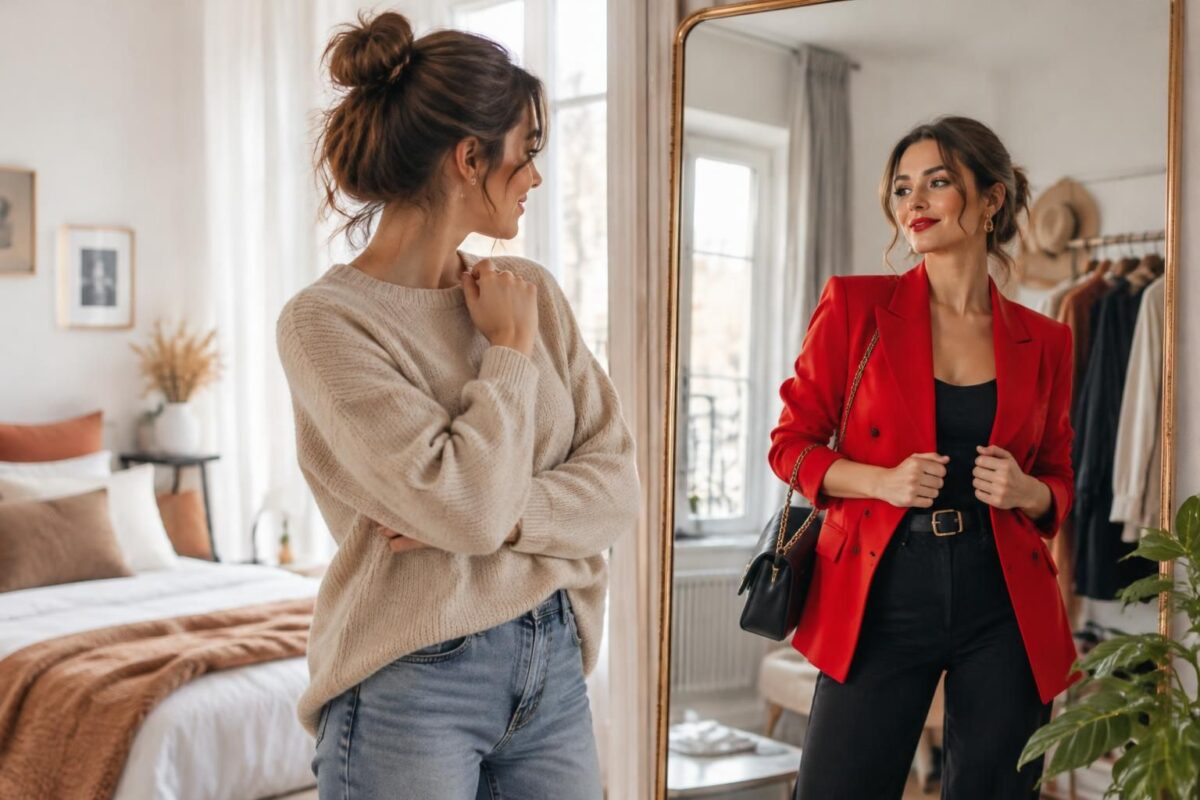
Looks mode: why your style changes with your mood
Hi, I’m Iris. Your style changes with your mood because colors, fabrics, and cuts can express how you feel and influence your self-confidence. Choose an outfit that meets your needs for the day: comfort, softness, or energy. The idea isn’t to follow every trend, but to make your personal style a simple way to express yourself.
Things to do right away
- Give your mood this morning a name: calm, stressed, happy, or tired.
- Choose a comfortable fabric to wear, such as cotton, linen, or jersey.
- Decide whether you want to feel comfortable, confident, or understated today.
- Change one detail to update your look: color, cut, or accessory.
- Prepare a backup outfit for mornings when you’re unsure.
To find some guidance without overhauling your wardrobe, check out these tips for finding your personal style and these ideas for expressing your style without unnecessary shopping.
Why your mood changes your looks
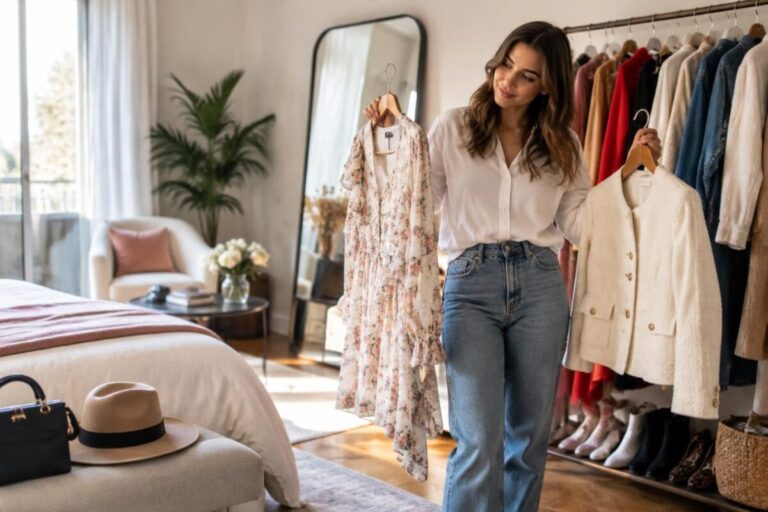
In the morning, you’re not just choosing an item of clothing: you’re also choosing how you want to feel during the day. A loose fit can give you room to breathe when you’re feeling low, while a structured jacket can sometimes help you feel more confident.
Colors play a part in this expression. Soft shades, such as beige or pale blue, often suit a desire for calm. A touch of red, coral, or bright blue can add energy without requiring you to wear an entirely colorful outfit.
Clothing can’t fix everything, of course. But when a fabric itches or a shoe pinches, discomfort can quickly creep into your day: comfort is a practical foundation for feeling good in your outfits.
An outfit can support your confidence without changing who you are
Imagine Léa, who slept badly and is short on time. She puts on a pair of jeans she knows, a soft sweater, and a well-cut jacket. This familiar combination limits the number of decisions she has to make and gives her a polished look without asking her to take on a different personality.
Conversely, a day full of energy might make you want to try a bolder piece or a statement piece of jewelry. The best guideline is simple: your outfit should support you, not constrain you.
Pairing colors, fabrics, and cuts with your state of mind
You can put your look together by considering three things: what your body needs, your energy level for the day, and the context. A workday, a walk, or an evening out doesn’t call for the same shoes or the same level of comfort.
| Mood of the day | Colors to try | Outfit choice |
|---|---|---|
| Calm or in need of softness | Cream, beige, pastels | Soft fabric, comfortable fit |
| Stress or a desire for confidence | Deep blue, black, a bright accent | Structured jacket, simple outfit you can feel at ease in |
| Melancholy or tiredness | Soft gray, light blue, pale purple | Light layers and comfortable fabrics |
| Joy or energy | Coral, light yellow, soft green | Colorful piece or subtle print |
These pairings aren’t rules. If a color said to be “energizing” doesn’t feel like you, a pair of earrings or a scarf is enough to add a bright touch. Fashion inspiration works best when it leaves room for your preferences.
A three-step method for choosing your outfit
- Step 1: name your mood. Choose one word without trying to analyze your entire day. “Need some calm” or “feel like being bold” is enough.
- Step 2: set a priority. Decide whether you’re prioritizing comfort, self-confidence, or expressing your personality. Keep the weather and your plans in mind.
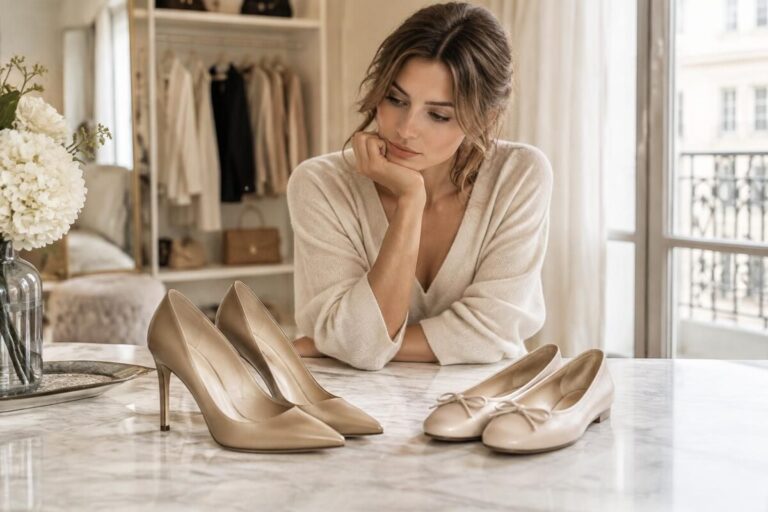
- Step 3: adjust one detail. Start with an outfit you know, then change just one thing: add a jacket, choose a brighter color, or swap uncomfortable shoes.
This method saves you from starting over several times in front of the mirror. One small step that’s often overlooked: walk a few steps in your shoes before heading out.
If it’s a calm morning…
If you feel at ease, choose natural fabrics and flowing cuts. A jersey dress with comfortable sandals or relaxed-fit pants with a lightweight top creates an easy-to-wear silhouette.
If it’s a stressful morning…
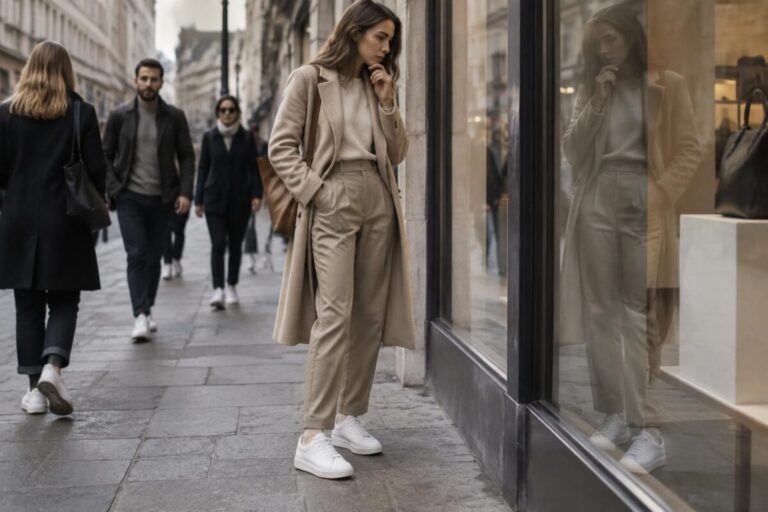
If you’re in a rush or feeling unsettled, choose a tried-and-tested combination: comfortable pants, a simple top, and a jacket that adds structure. Preparing this option the night before means you won’t have to make so many choices when you wake up.
Accessories to change up a look to suit your mood
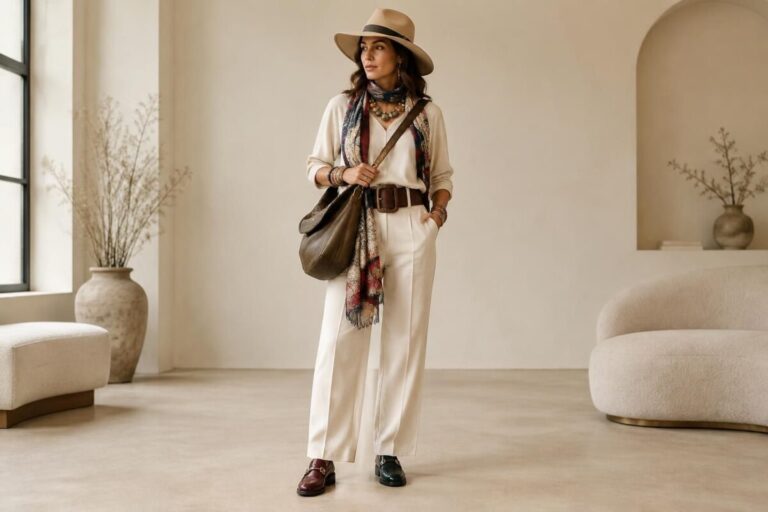
An accessory can change the feel of an outfit without replacing your entire wardrobe. Delicate jewelry and a soft scarf create a subtle impression; a statement belt or graphic earrings draw more attention.
Keep a small selection of easy-to-pair pieces. For an unpredictable day, wear a simple base outfit and slip an accessory into your bag: you can adjust your look if your mood changes throughout the day.
Things to avoid when dressing to match your mood
- Expecting an outfit to change everything: it can support your state of mind, but it can’t replace rest or the time you need.
- Following a trend that makes you uncomfortable: if you’re constantly adjusting a garment or holding your breath in a tight fit, choose something else.
- Forcing yourself to wear something from another time in your life: keep it if it makes you feel good and is comfortable, not out of obligation.
- Trying to control everything: a look doesn’t have to be perfect to feel like you.
The best indicator isn’t what other people think, but how you feel when you move. A successful outfit lets you get on with your day without thinking about it every moment.
Frequently asked questions about fashion looks and mood
How can you quickly choose an outfit to match your mood?
Name your mood, choose a priority such as comfort or confidence, then adjust a color, a cut, or an accessory.
What colors should you wear when you’re low on energy?
You can try a touch of bright color, such as coral or soft yellow, with a comfortable base outfit. If neutral shades make you feel more at ease, stick with them and add a bright detail.
What should you wear when you feel stressed in the morning?
Choose a simple outfit you know, with a structured piece and comfortable shoes. Preparing it the night before reduces the decisions you have to make when you wake up.
Is it worth keeping clothes associated with an earlier period in your life?
Yes, if those pieces are comfortable and make you feel good. If they bother you or no longer fit your body, you can put them away without feeling guilty.
Thank you for your interest; Iris. Thanks also for leaving a comment at the end of the article. See you soon