Fashion accessories: this lack of consistency quickly works against you
Hi, it’s Iris. To avoid a lack of cohesion working against you, choose one standout accessory and keep the others in harmony with it. A bag, jewelry, or a belt can define an outfit, but they can also muddle its message if they compete for attention. A few simple guidelines are all it takes to create a harmonious accessory combination that stays true to your personal style.
What to do right away
- Identify the accessory that draws the most attention in your outfit.
- Remove the pieces that compete with this focal point.
- Check that the colors and materials work well together.
- Choose accessories that are comfortable and suit your proportions.
- Look at your silhouette in a mirror while moving.
To find pieces that truly complement an outfit, explore these tips for defining your look without overdoing it. And if your image sometimes seems to be going in several different directions, these ideas about changes that muddle your style can help you bring your outfit coordination into focus.
The pitfall: every accessory wants to be the centerpiece
An accumulation of accessories isn’t necessarily excessive because of the number of pieces. It becomes excessive when every item demands attention: large earrings, a statement necklace, a logo bag, and a contrasting belt can create an ensemble with no clear hierarchy.
Imagine Zoé wearing a plain dress to dinner. She adds a bold bag, sculptural earrings, and a very shiny necklace. By taking off the necklace, she gives the other two pieces room to breathe: the look immediately feels more balanced.
A focal point gives the look direction
One standout accessory is often enough to express an intention. It could be a printed scarf, a structured bag, or a pair of earrings, while the other items remain more understated.
This rule doesn’t rule out mixing things up. Instead, it helps create stylistic cohesion: different metals can work together if the combination looks intentional rather than random.
| Statement piece | Balance it with | Effect |
|---|---|---|
| Colorful bag | Understated jewelry and simple clothing | A pop of color without visual competition |
| Large earrings | An open neckline and a delicate necklace—or none at all | Bring attention to the face |
| Statement belt | A bag and shoes with simple lines | Define the silhouette |
| Printed scarf | Colors echoed in moderation | Tie the outfit together |
Choose accessories that suit your personal style
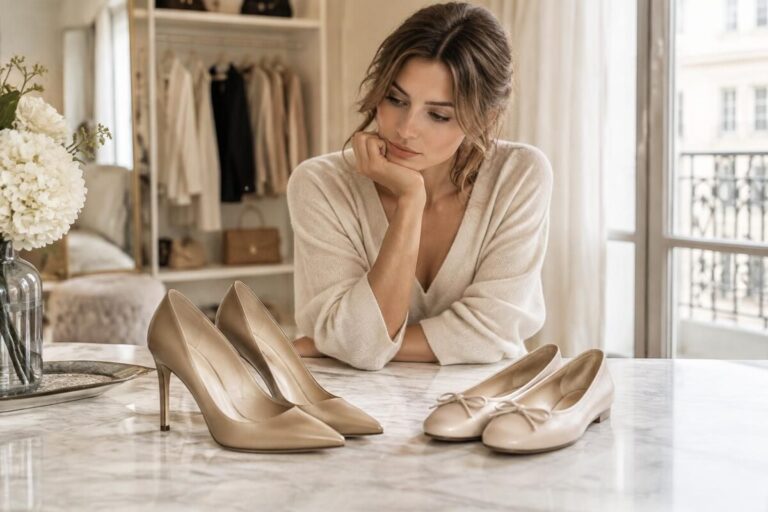
A successful accessory complements both your silhouette and your day. A practical everyday bag, a comfortable watch, or glasses that suit your face make more sense than a trendy piece that stays at the back of a drawer.
Start with the colors and materials already in your wardrobe. Neutral tones create an easy-to-coordinate foundation; a bolder piece can then add dimension without muddling your clothing identity.
Comfort and proportions matter, too
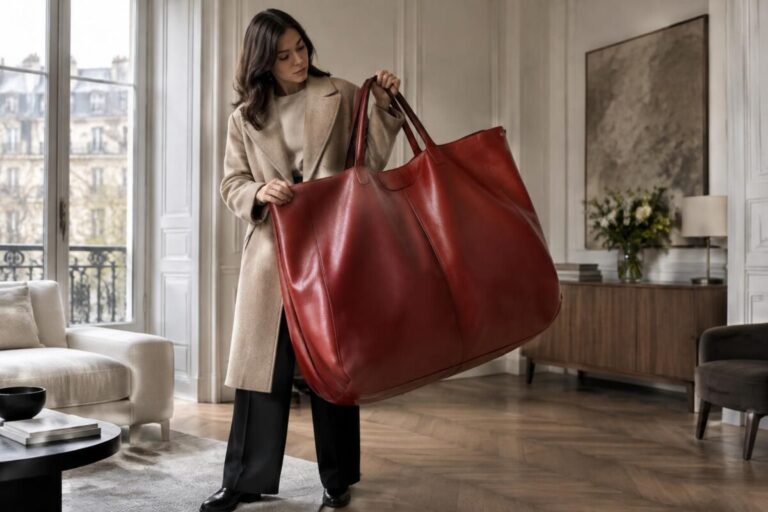
Jewelry that tugs, an overly bulky bag, or a hat you have to keep readjusting will eventually distract from your look. The right scale depends on your silhouette and outfit: the goal isn’t to follow a rigid rule, but to maintain a natural balance.
For a workday, a structured bag and simple jewelry may be all you need. For an evening out, you can swap one of these for a brighter statement piece without adding multiple bold accents.
A 3-step method for coordinating your accessories
- Choose an intention. Ask yourself whether you want to add color, define your silhouette, or draw attention to your face. This decision makes your accessory combination easier to read.
- Build around one statement piece. Choose one item to carry the message, then add one or two subtle details if needed. Quality and versatility are better than accumulating pieces you rarely wear.
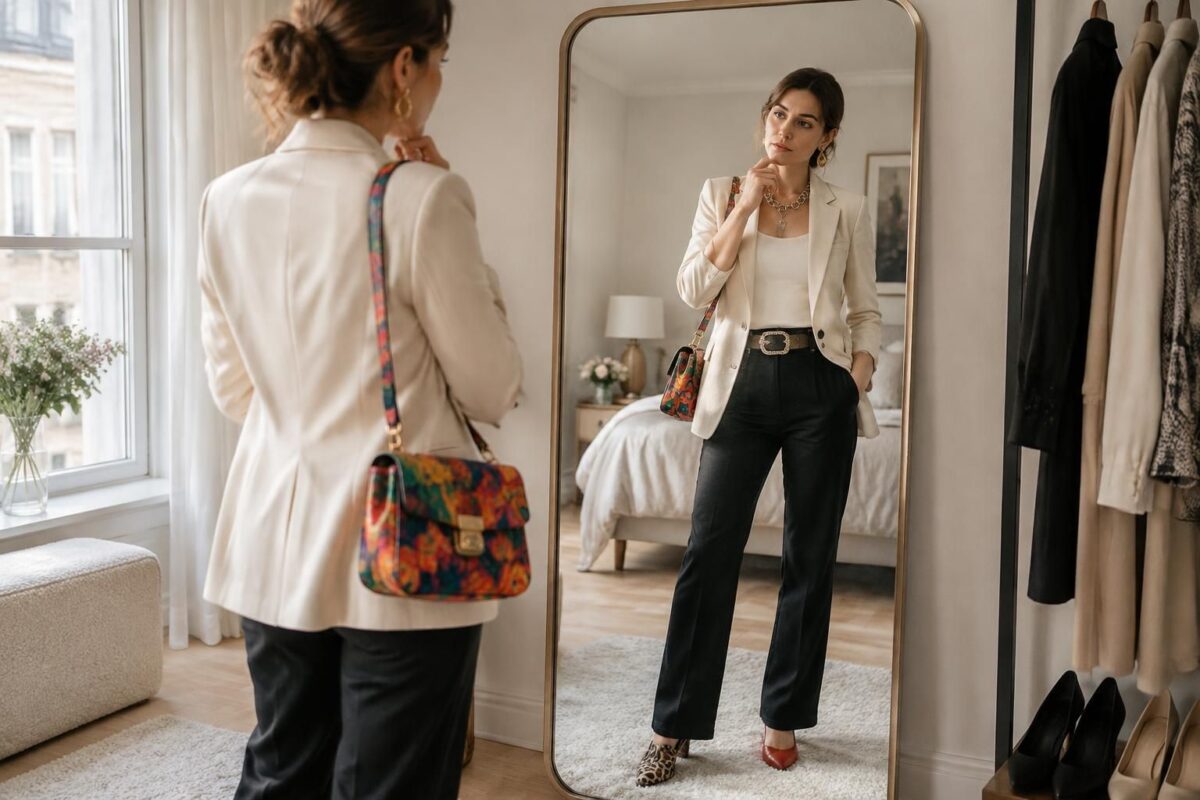
- Do the mirror test. Look at your outfit from the front and while moving. If an accessory gets in the way, dominates, or seems unrelated to the rest, remove it or swap it out.
These fashion tips aren’t meant to make every silhouette look the same. They offer a framework for expressing your personal style with intention: a cohesive outfit catches the eye without needing every detail to stand out on its own.
Frequently asked questions about coordinating accessories
How many accessories should you wear at once?
There is no fixed number. Generally, keep one statement piece and limit the other details if having too many muddles your silhouette.
Do all metals need to match?
Not necessarily. Mixing metals can work if the jewelry looks like it was chosen together and the overall look has a clear direction.
How can you add character to a simple outfit?
Start with a neutral base and add a standout accessory, such as a colorful bag, a printed scarf, or sculptural earrings. Keep the rest more understated.
How can you tell if an accessory isn’t right for you?
If it’s uncomfortable, throws off your proportions, or needs constant readjusting, try a different shape or size. Comfort is part of elegance, too.
Thanks for reading! Feel free to share your thoughts in the comments. — Iris