Fashion accessories: why your details say nothing
Hello, it’s Iris.
Your accessories say nothing when they pile up without intention: choose one standout detail, then build the rest around it.
Fashion accessories can add dimension to a basic outfit, but simply wearing them isn’t enough. To bring out your personal style, every detail should contribute to the same overall impression.
Things to do right away
- Choose a single accessory as your focal point: a bag, jewelry, a scarf, or shoes.
- Limit the other pieces to two or three subtle items.
- Repeat a color or material to create a visual connection.
- Balance the proportions: a statement necklace calls for more understated earrings.
- Remove any detail that doesn’t serve your silhouette or self-expression.
Imagine an outfit made up of dark-wash jeans and a white shirt: a red bag can give it direction, while jewelry, a printed scarf, and a contrasting belt could muddle the message. To better spot what throws an outfit off balance, discover how a lack of cohesion can undermine your look and how to define your style without overdoing it.
Why your outfit details feel meaningless
An accessory gets its meaning from how it relates to your clothes, colors, and proportions. Without that connection, it remains an isolated piece: pretty, perhaps, but unable to strengthen your visual identity.
The problem often comes from choosing each piece individually. A sporty watch, a very dressy bag, and bohemian jewelry can work together, but they need a common thread. Otherwise, the outfit’s nonverbal communication becomes confusing.
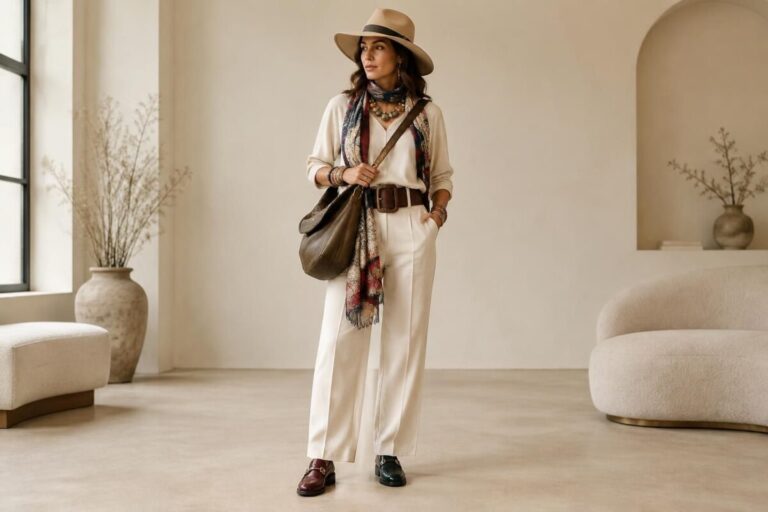
Being distinctive doesn’t mean wearing more. It comes through when a detail expresses a clear intention, like an inherited scarf that adds a personal touch to a simple coat.
The five accessory categories and their roles
| Accessory | What it can express | How to balance it |
|---|---|---|
| Jewelry | A bright accent or a personal signature | Keep bold shapes to just one piece |
| Bag | A practical, structured, or daring look | Match its size to your silhouette and outfit |
| Belt | A defined waist and a shaped silhouette | Choose a width that works with the garment |
| Scarf | Color, pattern, or a personal reference | Echo a shade that’s already present in the look |
| Shoes | The overall tone, from casual to dressy | Consider the length and volume of your bottoms |
Create a cohesive style without losing your personality
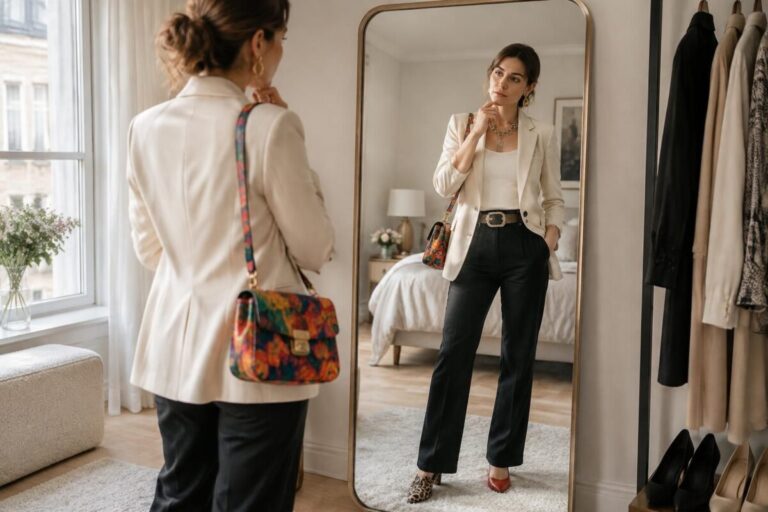
Creating a cohesive style doesn’t mean matching everything exactly. Often, repeating a shade, metal, or texture is enough to tie the pieces together. For example, a gold belt buckle can echo small hoop earrings without requiring you to pile on more jewelry.
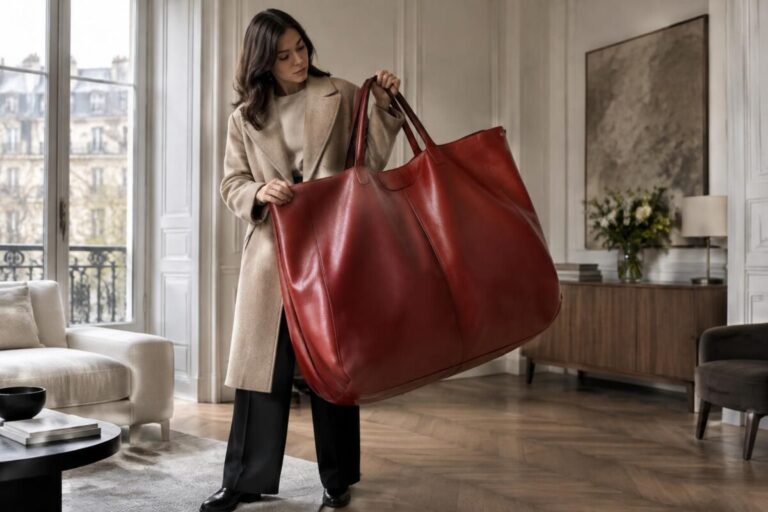
Proportions matter just as much. A large tote already draws the eye: pair it with delicate shoes and simple jewelry to let your silhouette breathe. Conversely, a compact bag can go with a more expressive pair of shoes.
The right choice also depends on the occasion. A silk scarf tied around your neck adds a polished touch at the office; tied to a bag handle, it becomes a more subtle accent. The meaning of the details changes with their placement and use.
A three-step method for choosing your accessories
- Define your intention. Decide whether the outfit should look casual, elegant, creative, or graphic. Use this direction as a filter when choosing accessories.
- Set a focal point. Choose one piece to carry the main message. If the bag is colorful, let the jewelry and other accessories take a back seat.
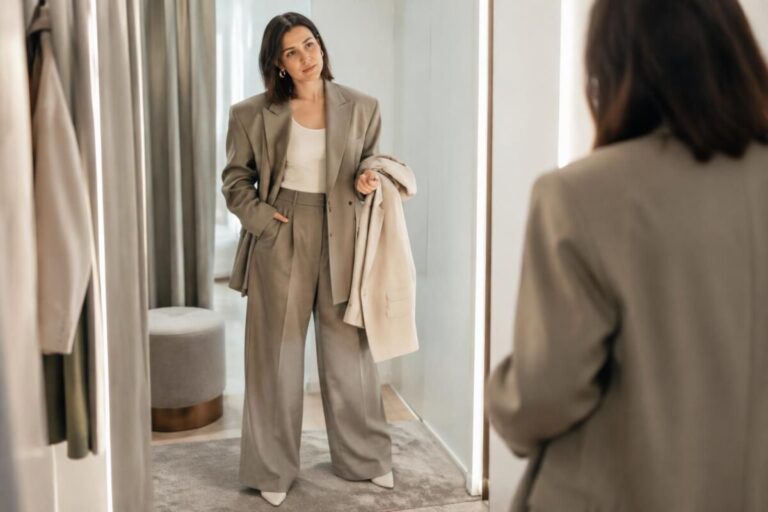
- Check the whole look. Look at the proportions, colors, and materials in a mirror. Remove an item if your eye no longer knows where to rest.
This final check helps avoid a common mistake: adding a piece simply because it’s beautiful, without asking whether it truly completes the outfit. A useful detail doesn’t have to be spectacular; it should reinforce your intention.
Let one detail speak instead of piling on accessories
A striking pair of glasses, an antique brooch, or colorful shoes can be enough to make an outfit recognizable. The goal isn’t to follow a strict rule about the number of accessories, but to leave some visual space around the piece that matters.
To try a new combination, start with a simple base and add accessories one at a time. If each addition clarifies the look, keep it; if it distracts without adding meaning, take it off.
Useful questions about fashion accessories
How many accessories should you wear in an outfit?
There’s no required number. Start with a focal point and a few secondary pieces, then remove anything that overwhelms your silhouette or muddles your intention.
How can you avoid an overly busy look?
Balance proportions and colors. If a bag, necklace, or pair of shoes is already drawing attention, keep the other details more understated.
Do all your metals have to match?
No. Gold and silver can be mixed if the result looks intentional. Choosing one dominant metal or similar shapes can help tie the pieces together.
Which accessory should you choose to personalize a basic outfit?
Choose the one that best expresses the effect you’re looking for: a scarf for color, a belt to shape your silhouette, or jewelry for a subtle signature.
Thanks for reading! Feel free to share your thoughts in the comments. — Iris