Fashion Accessories: 6 Mistakes That Throw Off Your Silhouette
Hi, I’m Iris. To keep your accessories from throwing off your silhouette, focus on one statement piece and check the balance of shapes, colors, and lengths. A watch, a bag, or a belt can transform an outfit, but it can also draw the eye to the wrong place. The best rule of thumb: every item should complement the look, not compete with it.
Do this right away
- Remove an accessory if several pieces are already drawing attention.
- Check that the size of your bag is in proportion to your silhouette.
- Place your belt where it naturally complements the cut.
- Match your shoes to the style and length of your pants.
- Choose a dominant color, then add complementary shades.
To spot details that throw an outfit off balance, explore these tips on accessory mistakes that throw off your look and these ideas for making the most of your silhouette.
6 accessory mistakes that throw off your silhouette
An accessory shouldn’t be judged on its own: what matters is its size, placement, and how it works with the rest of the outfit. Mina, for example, wears simple jeans and a white shirt. A large bag, a contrasting belt, and several pieces of jewelry are enough to make her look less cohesive, even if she likes each item.
1. Too many accessories and layers of jewelry
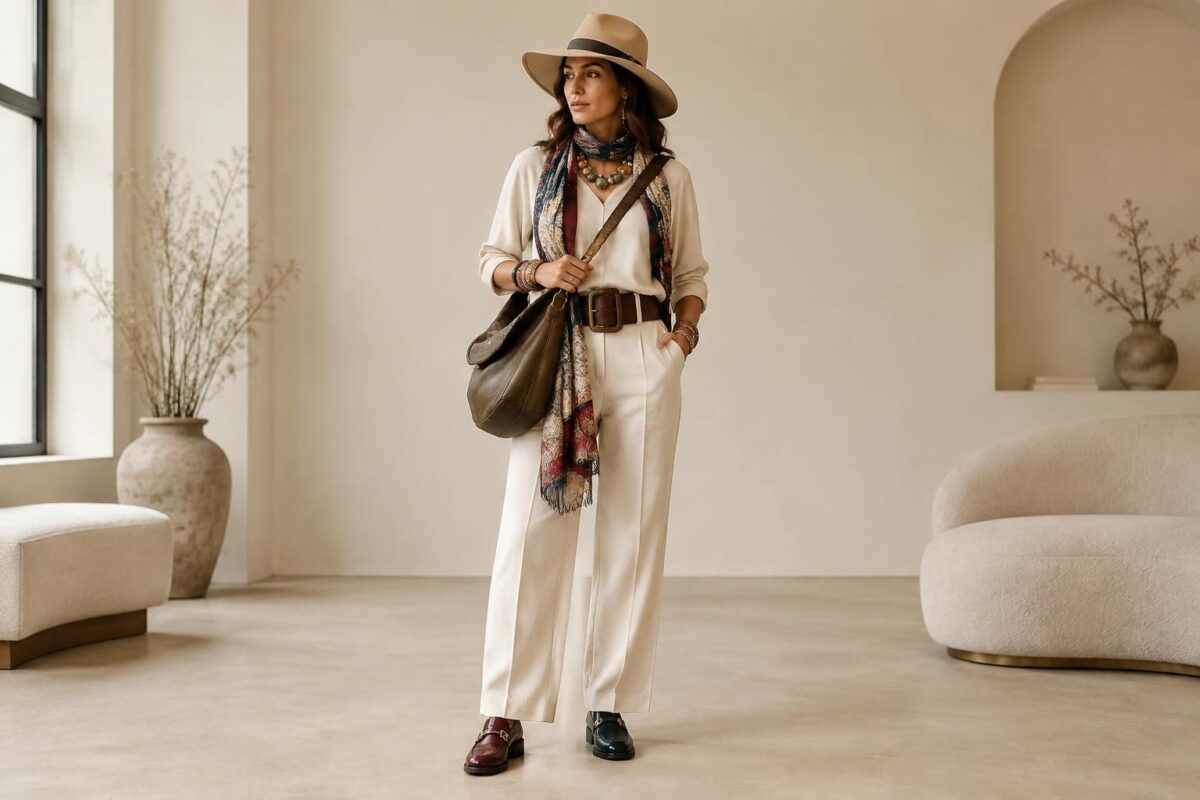
Layering necklaces, rings, bracelets, and a watch can quickly create an overload of accessories. The pieces compete for attention and obscure the line of the outfit. Usually, one or two well-chosen accessories are enough to add character.
Keep one focal point: noticeable earrings with delicate jewelry, or a statement necklace with bare wrists. A detail people often forget? Glasses and a watch also contribute to the overall balance.
2. Clashing colors and a lack of cohesion
Accessories in clashing styles or colors can visually break up an outfit. A very formal bag paired with sporty sneakers isn’t necessarily a fashion mistake, but another detail should tie them together, such as a structured jacket worn with casual pants.
If your outfit is already colorful or patterned, choose more understated accessories. If it’s simple, a pop of color can become the focal point without adding too many contrasts.
3. An oversized bag that takes over
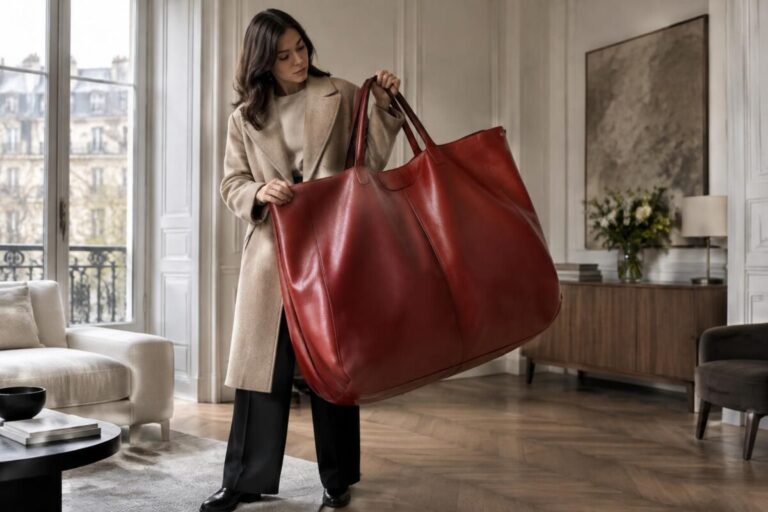
An oversized bag naturally draws the eye and can make proportions look off, especially with a fitted outfit or a petite frame. That doesn’t mean you always have to choose a small style: instead, consider its size in relation to your coat, pants, and shoes.
For a busy day, a tote is practical. Carry it close to your body and balance its size with a fairly clean-cut outfit. For a casual outing, a more compact bag lets your silhouette breathe.
4. A poorly placed belt that breaks up the line
A poorly placed belt can make your torso look shorter or draw attention to an area you don’t want to emphasize. With a dress, a high waist can give the outfit structure; with pants, the belt generally follows the rise built into the cut.
Before you head out, look at your outfit from the front and side. If the belt creates too strong a dividing line, try a shade close to the garment or take it off: sometimes the line looks more fluid without it.
5. Shoes that don’t suit the length or style
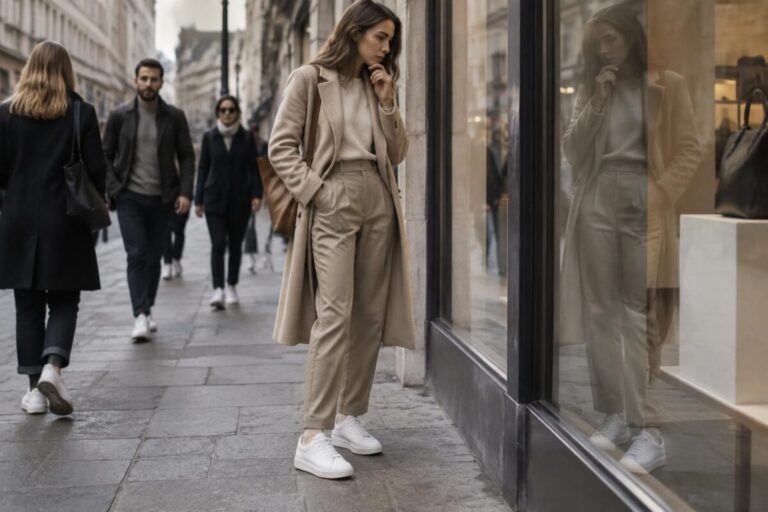
The wrong shoes can break up the line of your pants or throw off a very delicate outfit. Pants dragging on the ground often look too long and can make walking difficult; chunky shoes with very slim bottoms can also heighten the contrast.
Check the length with the shoes you plan to wear. Depending on the cut and style, the fabric can skim the top of the shoe without pooling on the ground.
6. Accessories that are too bold or chosen just because they’re trendy
An oversized logo, a chunky watch, or a very wide piece of jewelry draws the eye before the outfit does. A trend can be tempting, but if the accessory doesn’t suit your habits or the proportions of your clothes, it may muddy your style instead of making it your own.
Choose well-finished pieces and materials that will last. A simple, well-proportioned item often works with more outfits than a dramatic accessory worn just once.
A 3-step method to bring your accessories back into harmony
- Step 1 — Look at your silhouette: Identify the dominant shapes, the garment length, and where the eye is drawn first.
- Step 2 — Choose a focal point: Keep one accessory that adds interest, then simplify the rest. A subtle watch and a simple belt are often enough with an outfit that already makes a statement.
- Step 3 — Test it in motion: Walk, sit down, and check that your bag doesn’t pull on your jacket, your belt stays in place, and your pants don’t drag.
If your outfit is patterned, choose simple, solid-colored accessories. If it’s understated, add one colorful or textured piece, then stop there: contrast is more striking when it stays clear.
| Mistake | Possible effect | Simple fix |
|---|---|---|
| Too many pieces of jewelry | The eye is drawn in too many directions | Keep one statement piece of jewelry |
| Bag that’s too large | Proportions look unbalanced | Choose a size that suits the outfit |
| Poorly placed belt | The line looks broken | Follow the garment’s cut |
| Unsuitable shoes | The hemline loses its clean finish | Check the hem with your shoes |
| Clashing colors | The accessories compete with each other | Connect the shades with a shared color |
| Accessory that’s too bold | The piece dominates the entire silhouette | Choose a more proportionate size |
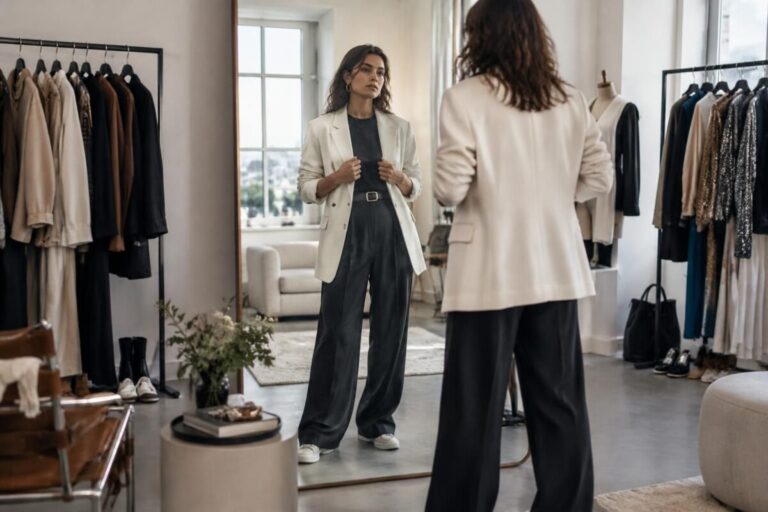
A quick try-on in front of a mirror is often enough to spot the one detail too many. Finally, take a few steps back and look at the whole outfit: if your eye goes straight to the accessory instead of the outfit, tone it down.
Helpful questions for choosing accessories
How many accessories can you wear without overloading an outfit?
One or two noticeable accessories are often enough. You can wear more if the pieces are subtle and work well together.
Do accessories have to match?
They don’t have to be identical. Instead, look for a shared color, material, or style that ties them to each other and to the outfit.
How can you carry an oversized bag without overwhelming your silhouette?
Balance its size with clothes that have clean lines, and carry it in a way that doesn’t interfere with the cut of your jacket or coat.
How can you keep a belt from breaking up your silhouette?
Place it to suit the garment’s cut, and try a color close to your pants or dress if the contrast looks too strong.
Thank you for your interest; Iris. Please also leave a comment at the end of the article. See you soon