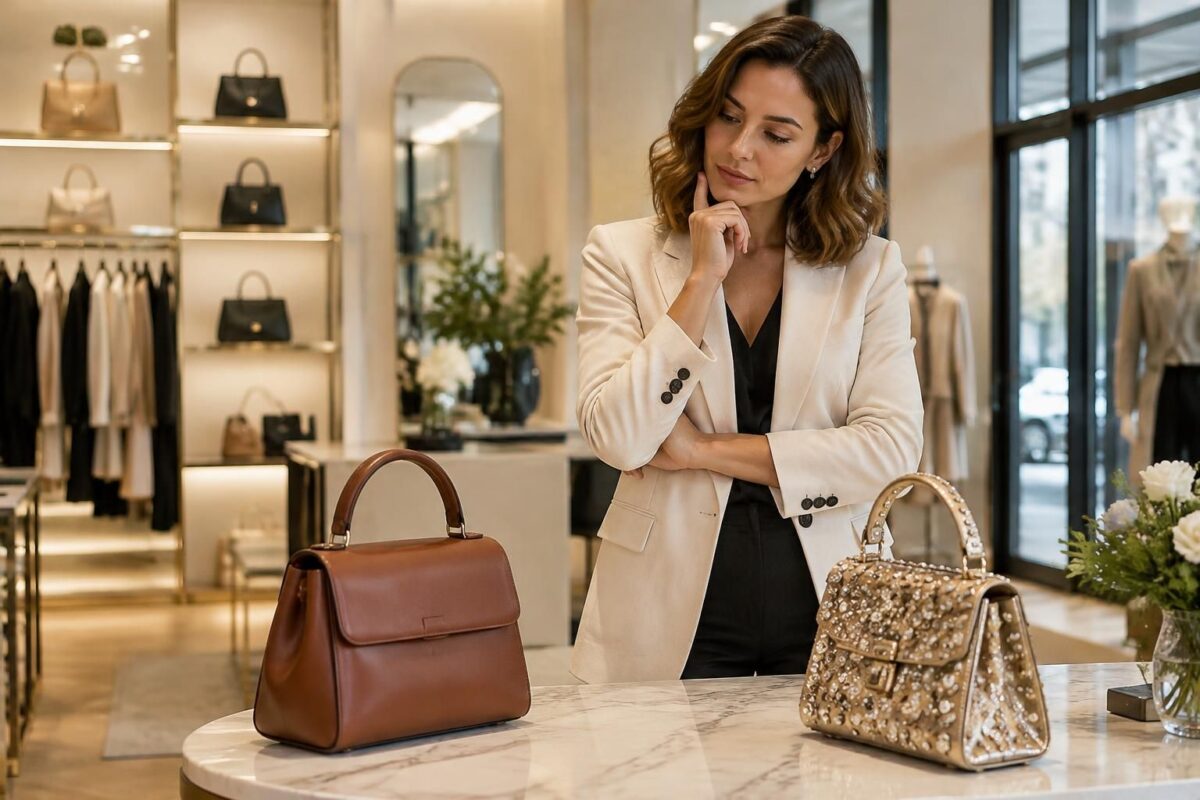
Fashion accessories: how to choose a bag without sending the wrong message
Hello, Iris here. The right bag is one that fits into your everyday life and enhances your style without throwing off your silhouette or outfit. Before choosing its color or shape, think about what you carry, how you get around, and the style statement you want to make. A successful accessory brings cohesion to your outfit and reflects your personal image without speaking for you.
Things to do now
- Make a note of your essentials: phone, wallet, glasses, laptop, or notebook.
- Choose your main use: work, going out, travel, or versatile days.
- Try the bag on to check its size and comfort while moving.
- Look at the silhouette: the bag’s volume and strap length change the visual balance.
- Check the finishing, closure, and handles before buying it.
To refine your choice of bag, compare sizes based on your habits and think about how your accessories work with your clothes. These two pointers can help you put together a harmonious look: choosing an accessory without throwing off your silhouette and deciding between a bag and a belt.
Small bag or tote: the size that suits your everyday life
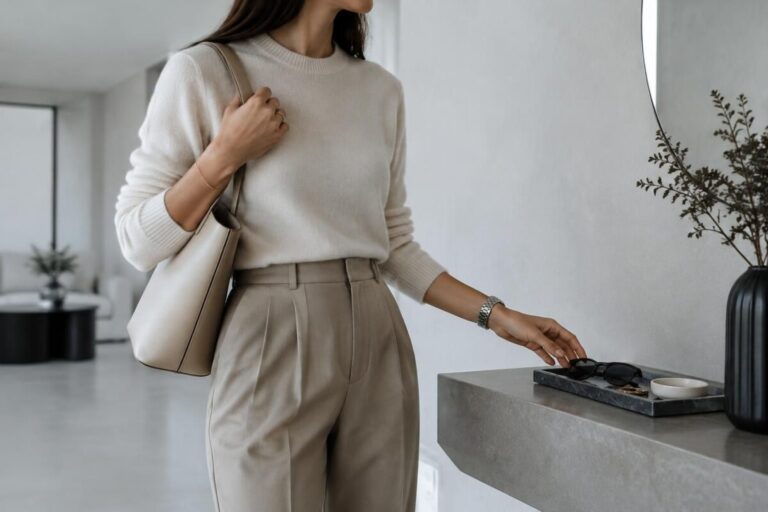
A small bag works if you go out with just the essentials and want to keep your hands free. A tote or structured style is better suited to long days, especially if you carry documents or a laptop.
Imagine Lina, who walks to work and takes public transit. Her ideal bag isn’t necessarily the biggest one: a crossbody bag with an adjustable strap, a reliable closure, and a few compartments may be more practical than a heavy tote that she fills without thinking.
| Use | Size to consider | What to check |
|---|---|---|
| Light outing | Small bag or clutch | Room for the essentials |
| Workday | Crossbody bag or structured tote | Dimensions, closure, and comfort |
| Frequent travel | Shoulder bag | Adjustability and stability when worn |
| Outfit that already makes a statement | Discreet or medium-sized bag | Balance of volume and details |
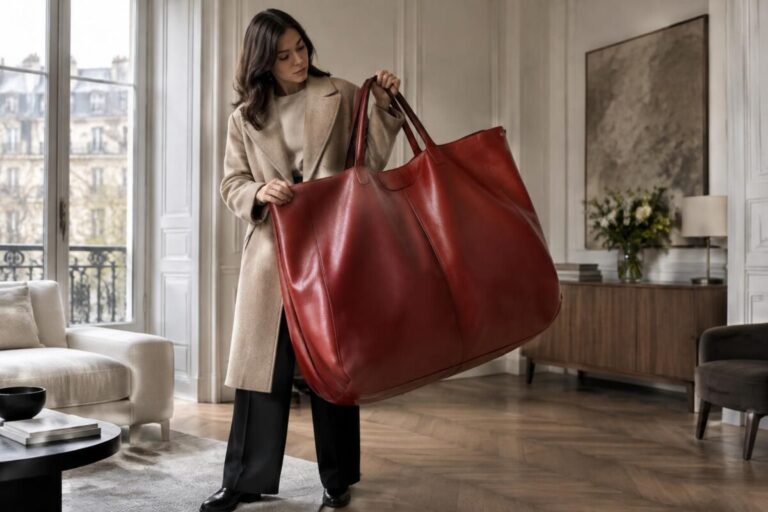
The size shouldn’t just suit what you carry: it should also work with your silhouette. A well-proportioned medium-sized bag is often more versatile than a tiny or oversized style.
Shape and how you wear it: finding balance with your silhouette
The shape and position of a bag change the overall line of an outfit. If you want to draw the eye upward, wear it on your shoulder or in the crook of your arm; if you’d rather balance broad shoulders, a longer strap can create a counterpoint near your hips.
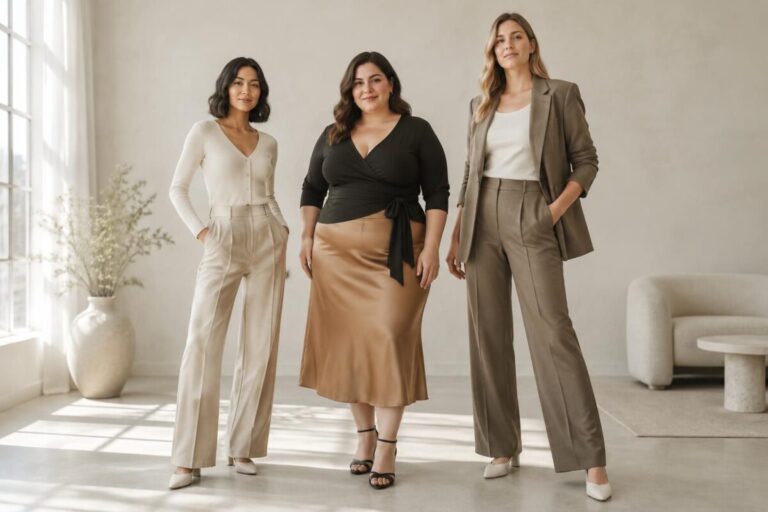
These pointers aren’t rules to follow to the letter. Someone petite can carry a medium-sized bag, while someone with a long, lean silhouette can have fun with generous proportions: what matters is that the bag doesn’t seem to overwhelm you or disappear into the outfit.
Three steps to choosing a bag that sends the right message
- Define its purpose. Separate the items you need from those you rarely carry, then choose a size that suits your most frequent use.
- Try it on. Test the bag with an outfit similar to what you usually wear. Check that the strap is comfortable and the bag doesn’t restrict your movement.
- Assess the style and material. Ask yourself whether the color works with several outfits or whether it’s meant to be a statement piece. Examine the stitching, fastenings, lining, and closure.
This test helps you avoid a common pitfall: buying an attractive style in a store without checking how heavy it is once it’s full. A narrow strap or rigid shape can become uncomfortable after a few hours, even if the bag looks great in photos.
Color and material: choosing between versatility and character
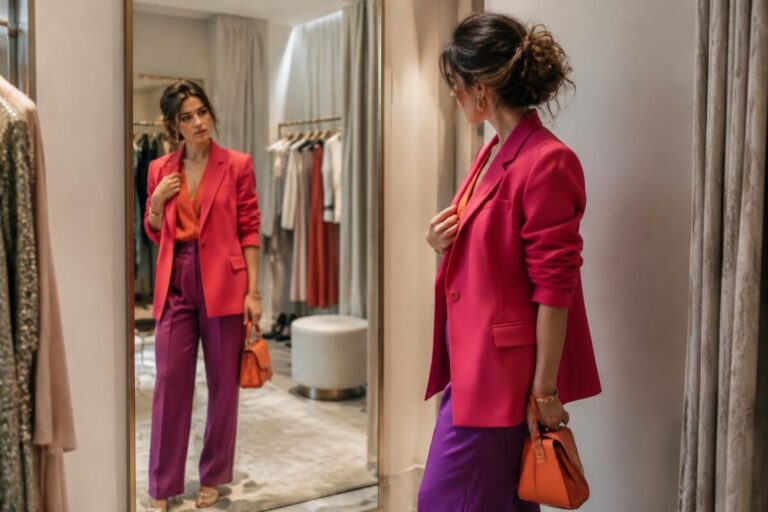
For an everyday bag, black, cognac, taupe, or cream goes easily with many wardrobes. A bright shade, on the other hand, can become the focal point of a simple outfit; choose it because you like it, not just because it’s trendy.
The material affects the feel, care, and how the bag wears over time. Leather, quality canvas, or certain alternative materials can all work: look at the construction, the consistency of the stitching, the strength of the handles, and the information available about how it was made. The material alone doesn’t guarantee durability.
The best choice is one you’ll enjoy carrying for every occasion you have in mind. A discreet bag can let a bold look breathe; a colorful style can give a simple outfit a lift. In either case, it should enhance your personal image rather than impose a role on it.
How can you tell if a bag really complements your outfit?
Before deciding, imagine three outfits from your wardrobe with the bag. If it only works with one, it’s probably a special-occasion piece rather than a versatile style—which can be a perfectly sensible choice.
A bag that sends the right message doesn’t try to say everything. It meets a need, complements your silhouette, and brings functionality and style together in a clear way.
What bag should I choose for everyday use?
A comfortable, well-organized medium-sized bag is often a good choice for everyday use. If you carry a laptop or documents, check its dimensions and how comfortable the handles are.
What is the most versatile bag color?
Black, cognac, taupe, and cream go easily with many outfits. Also choose a shade that works with the colors you already wear.
How do I choose a bag size to suit my silhouette?
Take proportions into account without limiting yourself to fixed rules. Try several sizes and see how they balance with your outfit and stature.
What details should I check before buying a bag?
Examine the stitching, fastenings, closure, lining, and how comfortable the strap is. Also test the bag’s weight with a few items inside.
Thanks for reading! Feel free to share your thoughts in the comments. — Iris