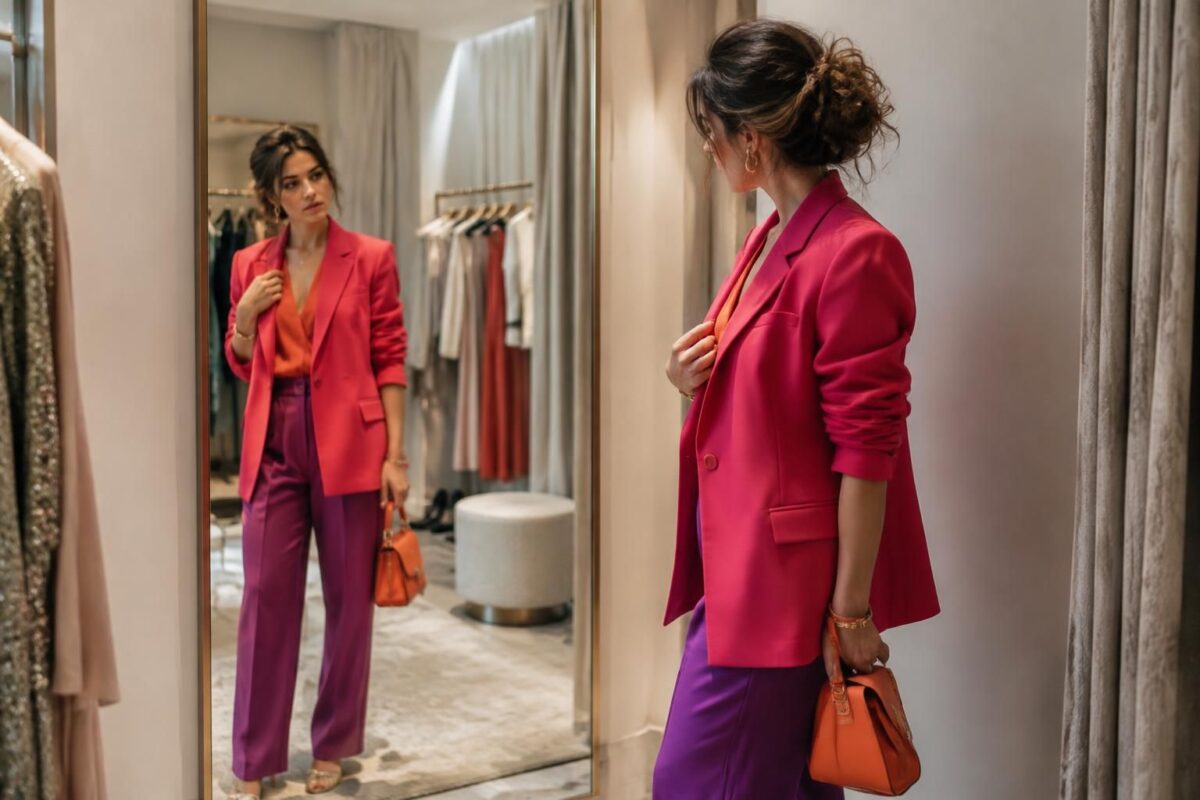
Looks mode: you like this look, but it doesn’t feel like you
Hi, it’s Iris.
A look you like but that doesn’t feel like you doesn’t need to be copied: keep the details that appeal to you and adapt the rest to your personal style.
An outfit seen in a photo combines clothes, posture, lighting, and styling. If the result looks different in your mirror, it’s not a failure: it’s an opportunity to better understand your identity and personal taste.
Good habits to adopt
- Identify the detail that caught your eye: sometimes a color, a cut, or a combination is enough.
- Check for comfort: if you keep adjusting a piece, it may not be supporting your look.
- Adapt the proportions to your clothes and the way you move.
- Keep a familiar piece, like your favorite shoes or a jacket you wear often.
- Try the outfit on while moving, not just in front of the mirror.
Before recreating an outfit you saved exactly, separate what’s fashion inspiration from what fits your everyday life. To find some ideas, explore these questions to help define your style and these clues to recognize your personal style.
Why an inspiring look doesn’t look the same on you
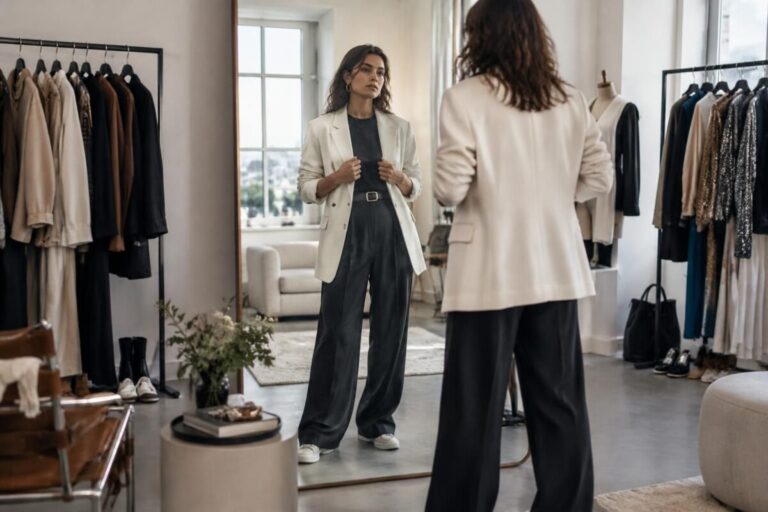
A photo doesn’t tell the whole story of an outfit. The angle, lighting, retouching, and posture can change the colors or proportions. In a fitting room, vertical lighting can also create harsher shadows, while a tilted mirror can sometimes alter how your silhouette looks.
There’s also the question of fit: two blazers with a similar cut won’t necessarily drape the same way. Sleeve length, shoulder placement, and fabric affect the overall look just as much as the size on the label.
Copying the clothes or recreating the effect you like
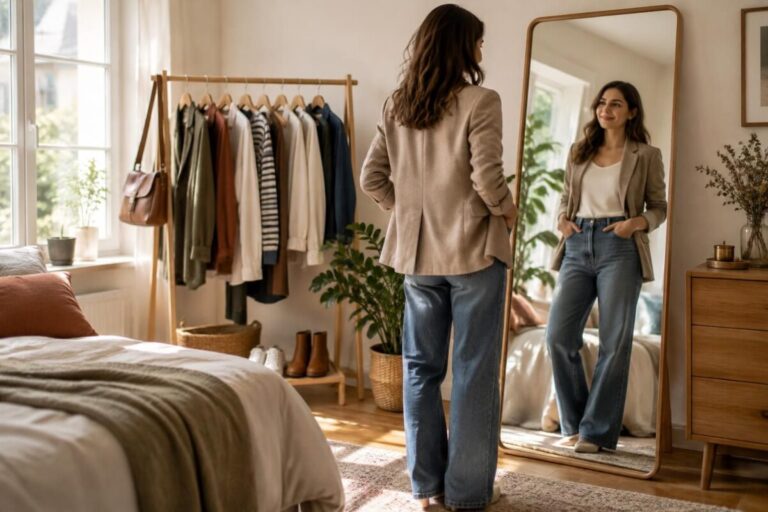
Imagine Léa, drawn to a look made up of an oversized blazer, straight-leg jeans, and loafers. She buys similar pieces, but feels like she’s wearing a costume: she rarely wears stiff shoes and prefers softer silhouettes.
By keeping the blazer but choosing more comfortable jeans and shoes she already wears, she preserves the feel of the outfit without losing her authenticity. Inspiration becomes useful when it supports your self-expression rather than replacing your identity.
| What you notice | What you can adjust |
|---|---|
| The outfit feels too formal | Replace a structured piece with a softer fabric |
| The proportions seem strange to you | Change the length of the top or the rise of the pants |
| You feel like you’re wearing a costume | Keep a familiar element and remove the detail that feels least natural |
| The result differs from the photo | Compare the cut and lighting, not just the colors |
A trend can inspire you without defining your style
A popular look can work well on one person and seem too formal, too romantic, or simply impractical on someone else. This mismatch says nothing about your worth or your ability to dress well: it simply means the outfit doesn’t fully fit your habits or your energy.
A common trap is trying to fix everything at once: posture, silhouette, accessories, makeup. When you control every detail, you risk losing the ease that brings an outfit to life. Self-confidence doesn’t depend on a perfect outfit; it also grows when you choose clothes that let you be yourself.
A look that feels different can even become your signature if you embrace it and it feels like you. Self-assertion doesn’t mean rejecting every trend, but deciding which ones deserve a place in your wardrobe.
Adapt a look to your personal taste in three steps
- Choose just one starting point. Note what really appeals to you: the color, the volume, a piece, or the overall mood. Avoid recreating the entire silhouette by default.
- Sort through the elements. Keep the comfortable pieces and replace the ones that restrict you. A similar cut in a different fabric can already transform the look.
- See how the outfit works in your real day. Walk, sit down, and check how you feel after a few minutes. If you’re thinking more about your clothes than what you’re doing, adjust one detail.
This method helps you tell the difference between simply trying something new and finding something you truly love. The best guide is how comfortable you feel, not how closely you match an image.
Why doesn’t a copied outfit look the same?
The cut, fabrics, proportions, posture, lighting, and retouching all affect the result. So a similar outfit doesn’t automatically create the same effect.
How can I tell if a look feels like me?
Ask yourself whether you feel comfortable, can move freely, and would wear these pieces in your everyday life. These are more important guides than matching a photo exactly.
Should I avoid trends that don’t fit my style?
Not necessarily. You can take one detail from a trend, like a color or an accessory, and pair it with clothes you already wear.
What should I do if I feel like I’m wearing a costume?
Remove or replace the detail that bothers you most, then keep a familiar piece. If you still feel uncomfortable, the outfit may not suit what you’re looking for right now.
Thanks for reading! If this resonates with you, I’d love it if you left me a comment at the bottom of the article. — Iris